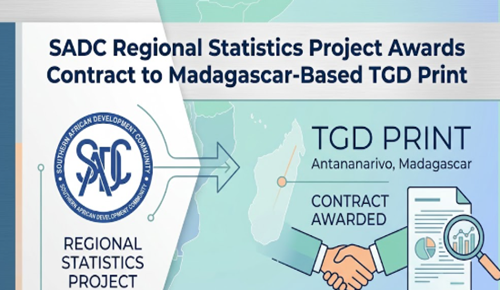
SADC Regional Statistics Project Awards Contract to Madagascar-Based TGD Print
29 May 2026
The SADC Regional Statistics Project, a key initiative aimed at strengthening statistical systems and data capacity across Eastern and Southern Africa, has awarded a contract valued at MGA 1.78 billion to TGD Print. The project is supported by the World Bank and forms part of broader efforts to improve the quality, accessibility, and reliability of statistical information across the region.The contract was awarded on 30 April 2026 under Project ID P175731, highlighting ongoing investments in data infrastructure and evidence-based policymaking within the Southern African Development Community (SADC) region.Contract Details and ScopeThe awarded tender (Reference No. MDG/FRN-03/DCNM/25, TOT Ref No. 26259231) carries a total contract value of MGA 1,782,444,900.The project falls under the SADC Regional Statistics Project, which seeks to strengthen statistical production, improve data management systems, and enhance the capacity of national statistical institutions across participating countries in Eastern and Southern Africa.While the specific contract scope was not detailed in the award notice, contracts awarded under regional statistics projects commonly involve:Printing and production of statistical publicationsDistribution of census and survey materialsProduction of data collection documentsPublication of statistical reports and analytical studiesSupport materials for national statistical officesInformation dissemination and communication activitiesSurvey implementation logistics and documentationThe procurement is expected to support the project's broader objectives of improving data availability and accessibility throughout the region.Entities InvolvedThe project is financed by the World Bank and implemented through regional and national institutions participating in the SADC Regional Statistics Project.The successful supplier, TGD Print, is a Madagascar-based company specializing in printing and publication services. The firm's selection reflects the project's emphasis on utilizing regional expertise and service providers to support implementation activities.Strategic Importance for the SADC RegionReliable statistics are essential for effective policymaking, economic planning, and development monitoring. Governments, development agencies, and private sector stakeholders depend on accurate data to guide investment decisions and measure development outcomes.The SADC Regional Statistics Project aims to:Improve statistical capacity across participating countriesStrengthen regional data harmonizationEnhance evidence-based decision-makingSupport economic and social development planningImprove access to official statisticsStrengthen monitoring of regional development goalsThe project contributes directly to regional integration and development efforts by promoting consistent and reliable statistical systems.Economic and Development ImpactInvestments in statistical systems generate long-term benefits that extend across multiple sectors.Expected BenefitsImproved quality and availability of official dataBetter policy formulation and planningEnhanced monitoring of development programsIncreased transparency and accountabilityStronger institutional capacityImproved regional cooperation on statistics and data managementAccurate statistics play a critical role in guiding investments, measuring economic performance, and tracking social development indicators.Technical and Procurement InsightsRegional statistics projects require coordinated implementation across multiple countries and institutions. Procurement activities often support large-scale surveys, censuses, data dissemination initiatives, and capacity-building programs.Printing and publication services remain important components of statistical operations, particularly for survey implementation, fieldwork activities, and dissemination of official reports.ConclusionThe award of the MGA 1.78 billion contract to TGD Print represents an important step in supporting the implementation of the SADC Regional Statistics Project. By providing essential printing and publication services, the contract will contribute to improved statistical operations and data dissemination across Eastern and Southern Africa.As governments and development partners continue prioritizing data-driven decision-making, investments in statistical infrastructure and supporting services will remain vital to achieving sustainable economic and social development throughout the region.#SADC Regional Statistics Project, #South Africa tenders, #Contract award, #TGD Print Madagascar, #regional statistics development, #data management project, #statistical capacity building, #Eastern and Southern Africa development, #government contracts Africa, #procurement news Africa, #statistical publications, #census and survey support services, #data dissemination project, #awarded tenders statistics sector, #World Bank funded project, #regional data infrastructure, #development statistics Africa
View Details
Eastern and Southern Africa Awards Mid-Term Evaluation Contract for Food Systems Resilience Program
02 Feb 2026
The Food Systems Resilience Program for Eastern and Southern Africa has reached a key implementation milestone with the award of a mid-term evaluation consultancy contract, according to newly published tender results. The contract award, disclosed on January 27, 2026, forms part of ongoing procurement news under a multi-country, World Bank–supported initiative aimed at strengthening food security and climate resilience across the region.Contract Overview and ScopeThe awarded contract covers the mid-term evaluation (Évaluation à mi-parcours du projet) of the Food Systems Resilience Program (Project ID: P178566). The evaluation will assess progress against development objectives, review institutional and operational performance, and analyse early outcomes of interventions implemented across participating countries in Eastern and Southern Africa.Key contract details include:Procurement method: Consultant Qualification Selection (CQS)Contract duration: 2 monthsMinimum qualifying technical score: 70Financing: IDA Credits 71570 and E0830The findings will support adaptive management, ensuring the programme remains responsive to climate risks, market volatility, and food supply challenges.Awarded Firm and Financial DetailsThe contract has been awarded to CABINET CAST, a consulting firm headquartered in Antananarivo, Madagascar, with experience in monitoring and evaluation assignments for development projects.Signed contract price - MGA 286,009,380Final evaluated price - MGA 286,009,380Award notification date - January 13, 2026CABINET CAST ranked first overall, meeting the technical threshold based primarily on consultant-specific experience relevant to regional development and resilience programmes.Entities Involved and Evaluation CriteriaThe procurement was conducted under World Bank guidelines, emphasising consultant qualifications over price competition. The technical assessment focused on prior experience in programme evaluation, with the minimum qualifying score set at 70. No competing firms exceeded this threshold, leading to a direct award under the CQS method.Strategic and Regional SignificanceThe Food Systems Resilience Program is a cornerstone initiative designed to help countries in Eastern and Southern Africa better withstand climate shocks, droughts, and food system disruptions. This government contract plays a critical role in:Measuring effectiveness of resilience-building investmentsStrengthening accountability for donor-funded programsInforming policy dialogue at national and regional levelsGuiding future phases and potential scale-up of interventionsAt a time of heightened climate vulnerability and food price pressures, the evaluation’s recommendations are expected to influence future funding priorities and implementation strategies.ConclusionThis awarded tender highlights the growing importance of independent evaluation in large-scale development programmes. With CABINET CAST now engaged, the Food Systems Resilience Program enters a decisive review phase that will shape its next steps and long-term impact across Eastern and Southern Africa.#AfricaContractAward #FoodSystemsResilience #EasternAfrica #SouthernAfrica #FoodSecurityAfrica #ClimateResilience #AgricultureDevelopment #ProcurementNews #AwardedTenders #GovernmentContracts #WorldBankProjects
View Details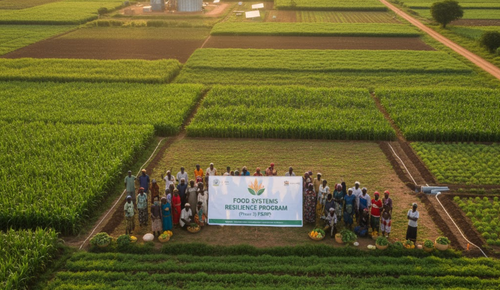
Construction of Land Registries in Karonga under the Food Systems Resilience Program (FSRP Phase 3)
20 Nov 2025
An Overview of the projectThe Food Systems Resilience Programme for Eastern and Southern Africa (Phase 3) (Project ID: P177816) is still working to improve the region's land governance, agriculture, and food security systems. The Government of Malawi has awarded a significant infrastructure contract aimed at enhancing land administration services in Karonga District as part of this ongoing initiative.The Request for Bids (RFB) method of procurement was used for this award, which is covered by the International Development Association (IDA) financing arrangement IDA-E1840. Overview of Contract Award Work scope: Building Land Registries in Karonga, Lot 1 Awarded Contractor: Lilongwe's ANEK Construction The contract amount is MWK 988,275,587.14. 120-day contract duration Award Announcement 13 November 2025 is the date. Reference for Bid/Contract: MW-MOA-499248-CW-RFB Complete compliance and responsiveness to the tender requirements were confirmed by the awarded bid matching the evaluated price. Rival Bidders and Assessed PricesCompliant (Assessed) Contractors Bidding Price Evaluation (MWK) Construction by ANEK 275,587.14 988 Contractors of Cheyeka Ltd. 032,921.59,425 WAC Structure $1,202,956,660.50 Construction by Kagu 433,424,41,644 Construction by Tristace 643,062,43,052 ANEK Construction met all technical and administrative evaluation criteria and had the most competitive pricing.Unsuccessful BiddersA number of bidders, including KK Boys and Girls Civils, Kokoliko-Juda JV Angel Investment, Sandstone Building Contractors, PN Construction, and others, were declared non-responsive because they failed to meet compliance requirements, had missing documents, or lacked the necessary technical capability.The Project's ObjectiveIn Karonga, the establishment of land registries is intended to assist improved systems for managing land Smallholder farmers' secure land tenure Improved investment and planning for agriculture Enhanced governance of the food system within the FSRP regional framework For Eastern and Southern Africa to achieve long-term resilience, this infrastructure is crucial. Important DeliverablesThe chosen contractor is going to provide A state-of-the-art land registry structure Infrastructure for digital registry and safe storage Administrative offices and public service counters adherence to national building standards Finalisation within the allotted 120 days Analysis of Economic ImpactCreation of Local EmploymentIt is anticipated that the construction will result in Temporary positions for local workers Prospects in Karonga for subcontractors An increase in the need for local suppliers (transport, aggregates, cement, etc.) This temporary increase in employment helps sustain local livelihoods.Boosting the Economy of AgricultureAccessible and accurate land records help with fewer land disputes Facilitating loans for agriculture Farmers' increased confidence in investing Better land-use planning This increases market growth and agricultural productivity. Institutional Value Over TimeBy strengthening the ability to govern land Land transactions generate more revenue for the government. The allocation of land becomes more transparent. Decision-making supported by data improves public management There is substantial long-term economic value to this institutional strengthening. Resilience of Local Food SystemsAn important district for Malawi's agriculture is Karonga. Enhancing land administration directly promotes Stable food output Improved climate-smart planning for agriculture Integration with more extensive regional resilience programmes of the FSRP As a result, the area is better equipped to withstand market shocks and climate variability.Final ThoughtsAn significant step towards improving Malawi's land governance system under FSRP Phase 3 is the awarding of the MWK 988 million contract to ANEK Construction. The new land registries in Karonga will greatly enhance the region's agricultural resilience, economic stability, and public service delivery if they are implemented well.#FSRP #FoodSystemsResilience #EasternAfrica #SouthernAfrica #MalawiProjects #Karonga #LandRegistryConstruction #WorldBankFunded #IDAProjects #ContractAward #InfrastructureDevelopment #AgricultureDevelopment #LandGovernance #EconomicImpact #PublicProcurement #ANEKConstruction
View Details